Loading alternatives…

Loading alternatives…
Use the one that fits your use Case in 2026

Next.js boilerplate for launching startups faster
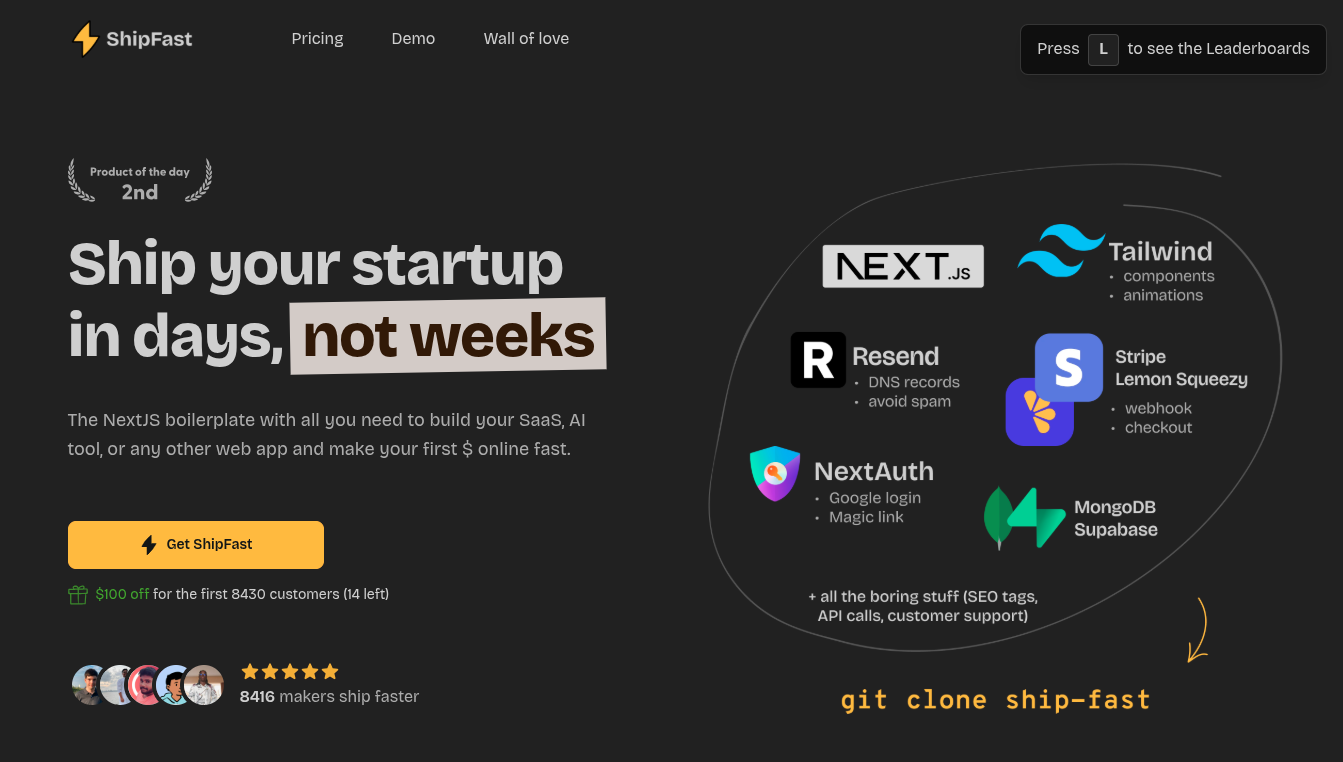
ShipFast gives developers a ready-to-customize Next.js codebase for launching SaaS products and online businesses. The starter includes user authentication, Google OAuth, magic links, Stripe and Lemon Squeezy payments, MongoDB or Supabase, transactional email, SEO, analytics, customer support, error handling, and reusable UI components. The codebase is available in JavaScript and TypeScript and supports both the Next.js App Router and Pages Router. It is sold as a one-time purchase with lifetime updates and can be used to build unlimited projects.
View ShipFast
Production-ready SaaS starter kit for modern web apps
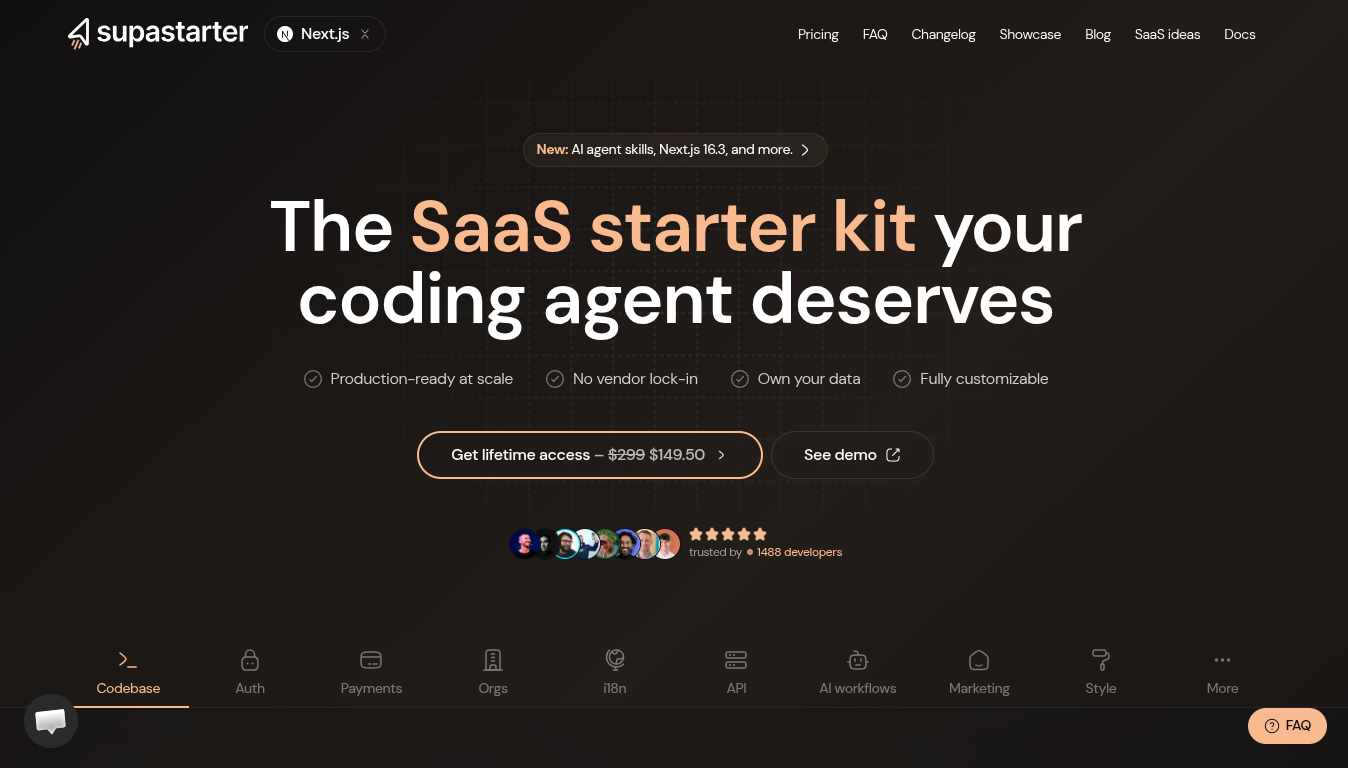
Supastarter gives developers a complete starting point for a SaaS application instead of making them assemble the usual infrastructure themselves. The current product supports Next.js, Nuxt, and TanStack Start. The Next.js version uses a structured monorepo with separate marketing and SaaS applications. It includes authentication, multi-tenant organizations, billing, email, storage, analytics, monitoring, background jobs, admin functionality, SEO, testing, and AI workflows. Payment providers include Stripe, Lemon Squeezy, Polar, Creem, and Dodo Payments. The source code is provided after purchase and can be customized for unlimited commercial projects under the applicable license.
View Supastarter
Complete Next.js starter kit for SaaS products
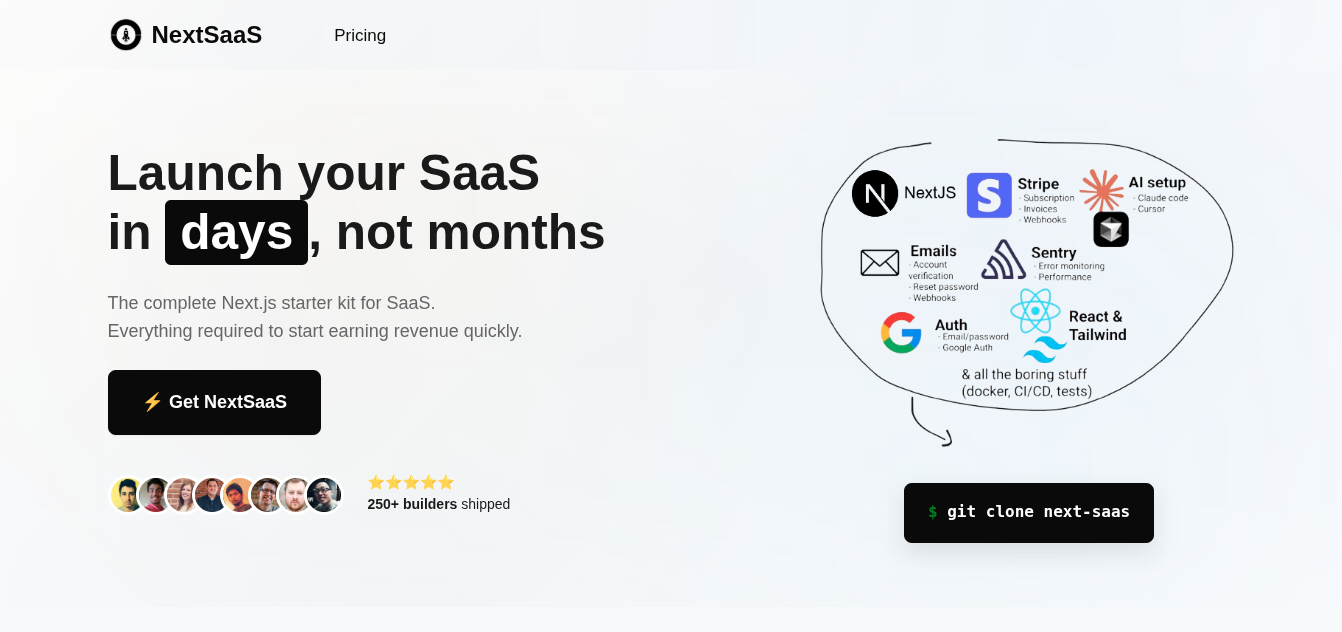
NextSaaS gives developers a working SaaS foundation built around Next.js, PostgreSQL, and Stripe. The codebase covers the parts that usually take time at the beginning of a SaaS project, including Google and password authentication, team workspaces, permissions, subscription billing, invoicing, failed-payment recovery, transactional email, error tracking, and deployment automation. It also includes Docker configurations, GitHub and GitLab CI workflows, and an admin data browser. The source code is provided so developers can modify the architecture and build their own product on top of it.
View NextSaaS
The production-ready SaaS starter kit for building and launching SaaS applications.
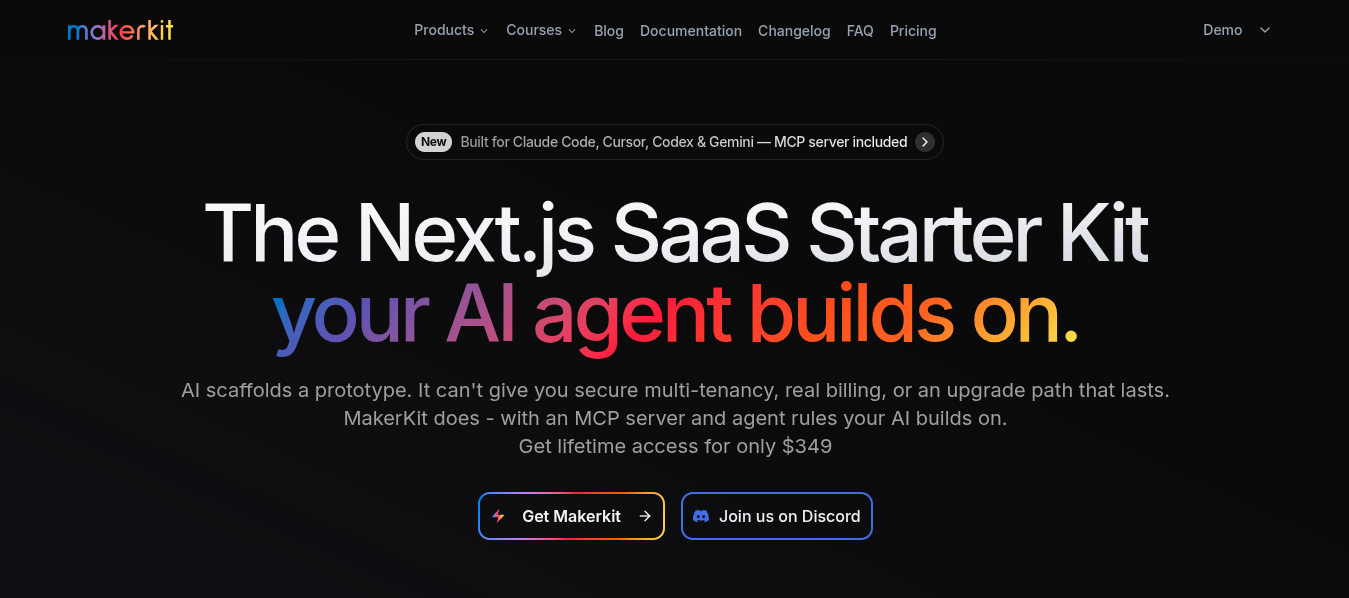
MakerKit provides starter kits for building SaaS applications with modern web stacks. Current options include Next.js, TanStack Start, and React Router, with Supabase, Drizzle, or Prisma-based stacks depending on the kit. Features include authentication, multi-tenant organizations, role-based access control, team management, billing, admin dashboards, transactional emails, internationalization, notifications, and responsive UI components. The kits also include tooling and rules designed to work with AI coding agents such as Claude Code, Cursor, and Codex, plus an MCP server. MakerKit offers lifetime updates and allows unlimited projects under its licenses.
View MakerKit
A free, open-source SaaS boilerplate built with React, Node.js, and Prisma
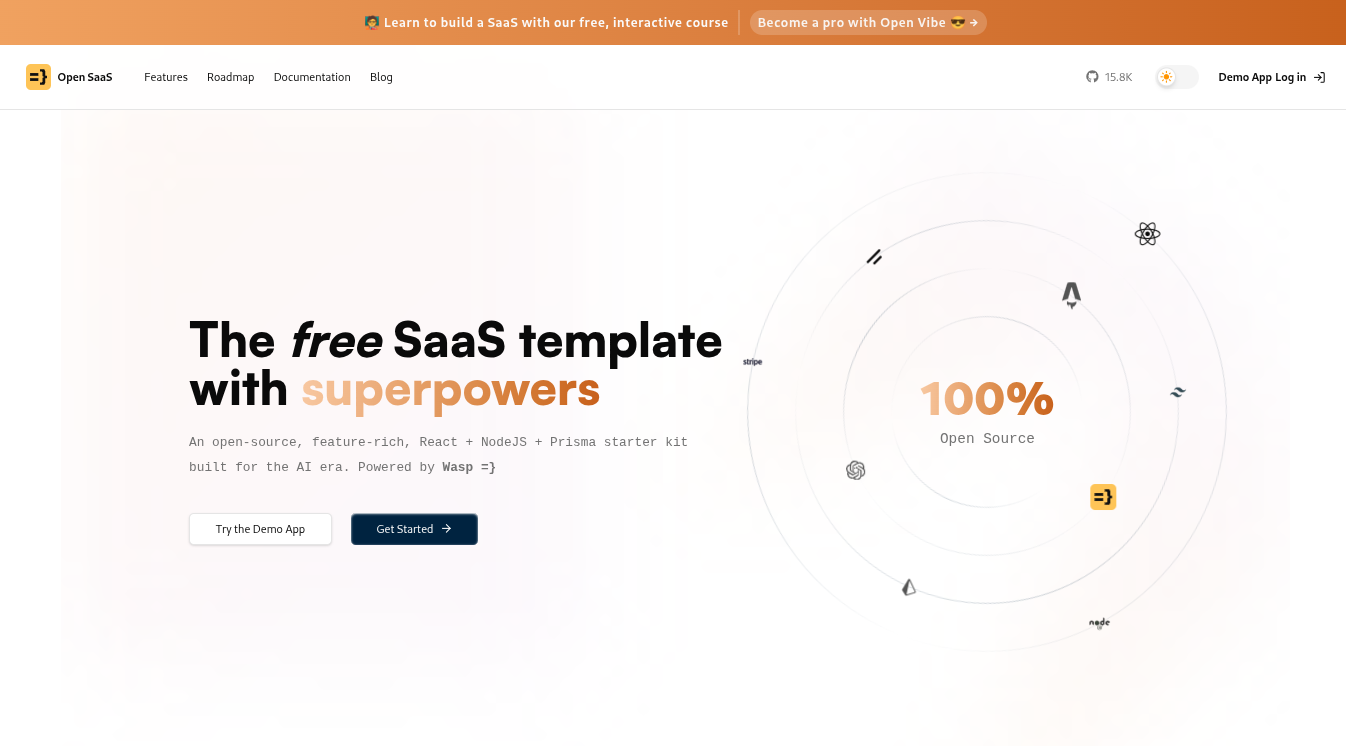
OpenSaaS gives developers a working SaaS foundation instead of making them wire together authentication, billing, database access, background jobs, email, and deployment from scratch. It is built on the Wasp full-stack framework and uses React, Node.js, and Prisma. The template includes email and social authentication, Stripe, Polar, and Lemon Squeezy payment support, AWS S3 file uploads, analytics, OpenAI integration, and a ShadCN UI based interface. You can deploy with Wasp to Railway or Fly.io, or deploy the application manually to another provider. The entire template is free and open source under the MIT license.
View OpenSaaS
React component library and design system for SaaS products
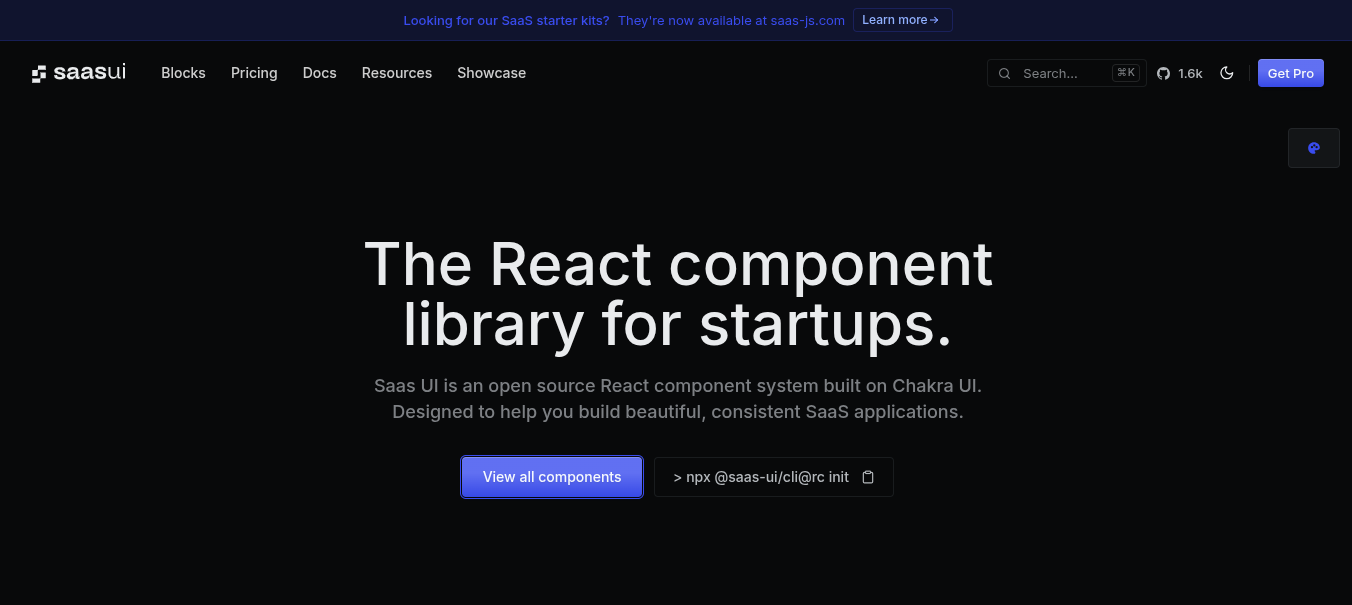
Saas UI gives developers a ready-made frontend foundation for SaaS products. It is built on top of Chakra UI and provides accessible, customizable components that can be composed into application interfaces. The open-source library includes components for common SaaS screens and interactions, while the Pro offering adds application blocks, starter apps, onboarding, billing, feature flags, and other more complete product patterns. Saas UI is backend agnostic, so it can be used with different backend architectures and frameworks. It currently supports modern React setups including Next.js and Vite.
View Saas UI
Open-source Ruby on Rails SaaS framework
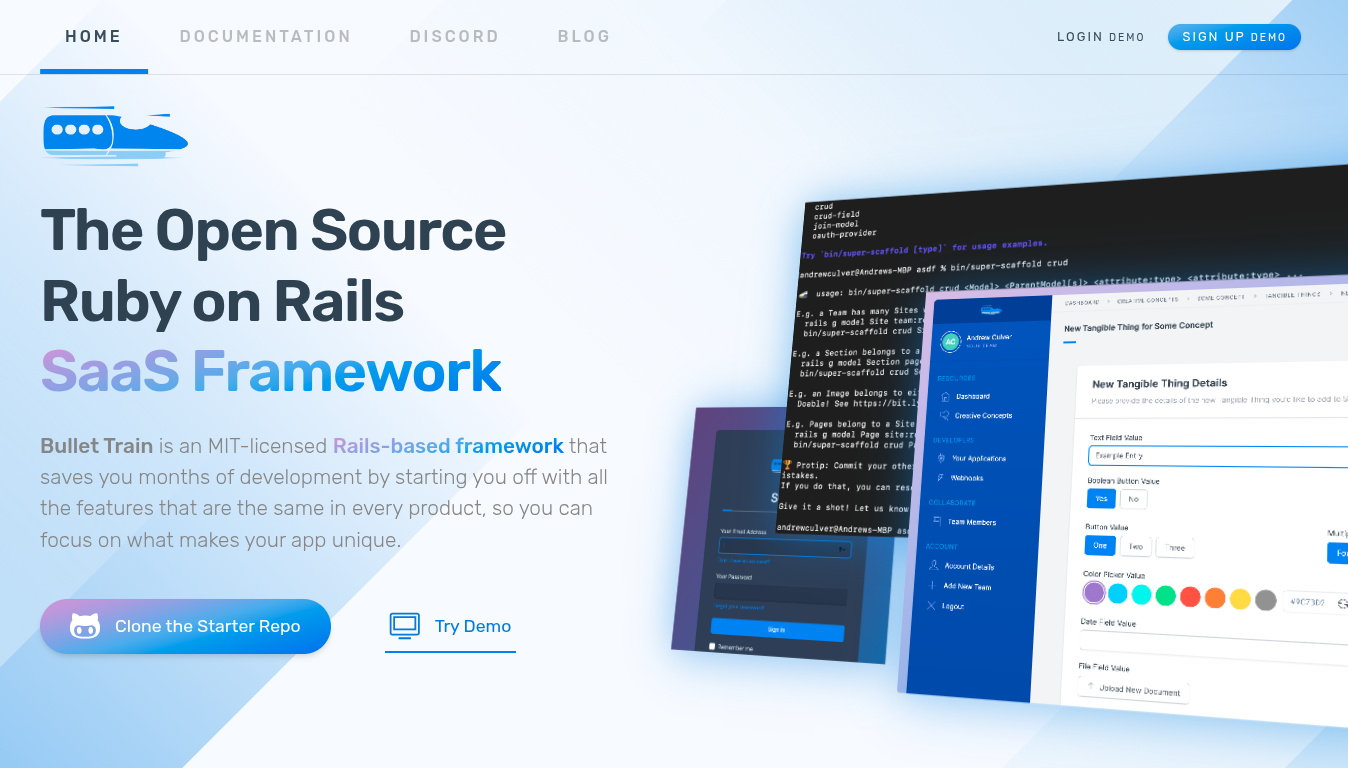
Bullet Train is built for developers who want to build a SaaS product on Rails without implementing the same application infrastructure from scratch. It provides account and team management, authentication, roles and permissions, onboarding, REST APIs, incoming and outgoing webhooks, Stripe billing, background jobs, an admin panel, testing tools, and a component-based UI system. The project is open source and uses Ruby on Rails with PostgreSQL and Redis. Its scaffolding system can generate application code and database structures as your product grows, making it more useful for a full SaaS application than a basic Rails starter.
View Bullet Train
Django SaaS boilerplate for building production-ready web apps
SaaS Pegasus generates a Django codebase based on the features and technologies you select. It handles common SaaS work such as authentication, email confirmation, password resets, social login, teams, invitations, permissions, Stripe subscriptions, background jobs, APIs, and admin functionality. It also has an AI-ready architecture with support for chat, agents, and tool use. The generated project is your codebase, so you can modify the application directly and deploy it to your preferred infrastructure. An open-source edition is also available with a more limited feature set.
View SaaS PegasusList your app in front of builders and founders actively searching for tools like yours. 100% free to submit, live in 24 hours.


